
Elliot AED
Compact, rugged, fully automatic AED for field kits, vehicles, and remote sites

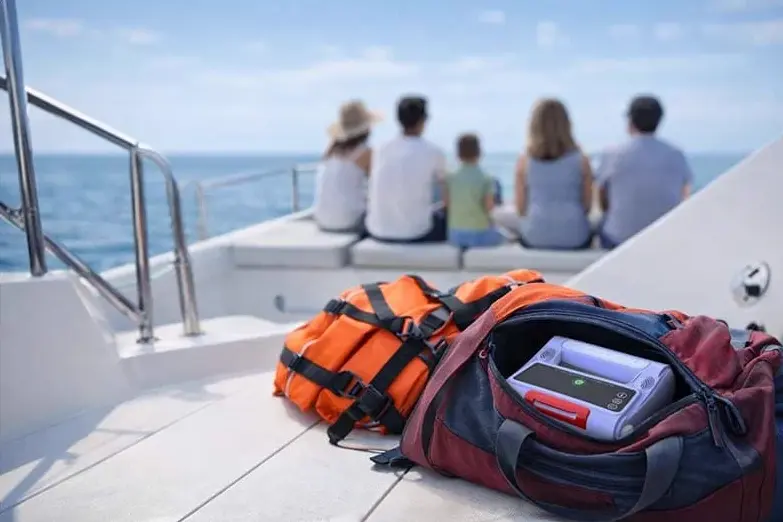
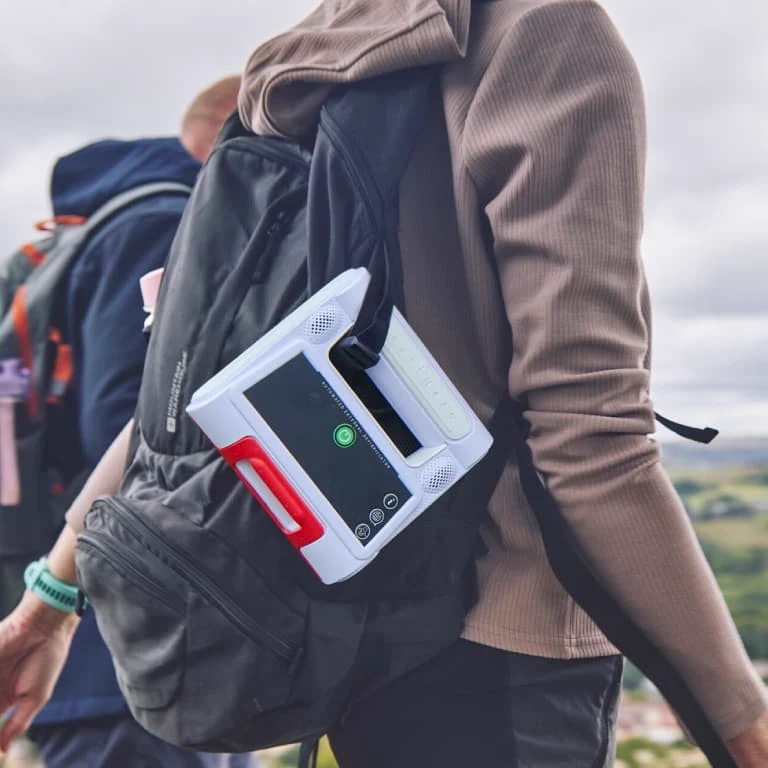
The HeartHero Elliot is a fully automatic AED built to travel: kit, glove box, or pack, not a wall cabinet. At 680 g it is light enough to issue with every team. One-motion pad deployment, voice and icon guidance, and automatic shock delivery: there is no shock button to find.
It is listed on the TGA Australian Register of Therapeutic Goods (ARTG 387771). Elliot Australia Pty Ltd is the exclusive distributor for Australia, New Zealand, and Fiji.
Why It Suits Field Work
Traditional AEDs are bulky and often stay in a cabinet. Elliot weighs 680 g including batteries and pads, and measures 15.50 x 15.85 x 4.58 cm.
- IP68 dust and water resistance
- Operating range -20 °C to 50 °C; storage -40 °C to 70 °C
- Operating altitude to 5,000 m
- Four replaceable CR123A Duracell lithium cells, with no charger, dock, or proprietary pack
- Daily, weekly, and monthly self-tests, plus tests on power-on and if a drop is detected
- Green status light when the unit is ready
- Spare cells are widely available if batteries are confiscated at a border
- Two languages on the unit; more via the HeartHero app
Fully Automatic When It Matters
Elliot analyses the rhythm and delivers a shock only when it detects a shockable rhythm. Voice prompts, on-device icons, and a CPR metronome stay with the rescuer through the event. Adult energy is 150 J; child mode (50 J, under 23 kg / 55 lb) is built in, with no separate paediatric unit to buy or carry.
App And Status
The HeartHero app (Bluetooth; iPhone 11–16, iOS 15–18) shows battery, pad condition, and self-test results, maps owned and shared devices, and can produce a time-stamped treatment summary with ECG data. Status at a glance:
- Green: ready
- Yellow: maintenance soon
- Red: maintenance now
- Blue: in use
- Grey: no device connected
Optional LTE does not stand between you and the shock: the unit works without a cellular contract. Self-tests and a 6-year warranty / service life are built to keep it ready in the kit.
Specifications
| Attribute | Value |
|---|---|
| Weight | 680 g (including batteries and pads) |
| Size | 15.50 x 15.85 x 4.58 cm |
| Operation | Fully automatic |
| Energy | Adult 150 J, child 50 J (±15% into 50 Ω) |
| Waveform | Biphasic truncated exponential (25–200 Ω) |
| Batteries | 4 x CR123A (Duracell supplied) |
| Capacity after 3 years | 20 shocks or 40 minutes at 20 °C |
| Charge time (new cells) | 25 s from pads on; 5 s from stand-clear |
| Pad life | 5.5 years (1 year storage + 4.5 years installed) |
| Ingress protection | IP68 |
| Operating temperature | -20 °C to 50 °C |
| Operating humidity | 15% to 90% non-condensing |
| Operating altitude | 5,000 m |
| Self-tests | Power-on, daily, weekly, monthly, drop, pre-treatment |
| Standards | IEC 60601-2-4, IEC 60601-1-11 |
| Regulatory | TGA ARTG 387771 |
| Warranty / service life | 6 years |
What's Included
- HeartHero Elliot AED (HH0527)
- Pre-installed electrode pad cartridge (HH1210)
- 4 x Duracell CR123A batteries (pre-installed)
- Quick-start instructions on the box
Ships with pads and batteries installed, ready to store in the kit. Distributor accessories include replacement pads, a battery door, hardshell case, rescue/prep kit, wall sign, and wall cabinet.
Sources
- Elliot Australia
- Elliot product specifications
- HeartHero
- HeartHero Elliot AED Technical Manual, MSC-2003 Ver 01
- TGA ARTG 387771
Get Your Elliot AED
Get $50 off your Elliot AED through the Austere Risk Ambassador Program at elliotaed.com.au/amb/austererisk